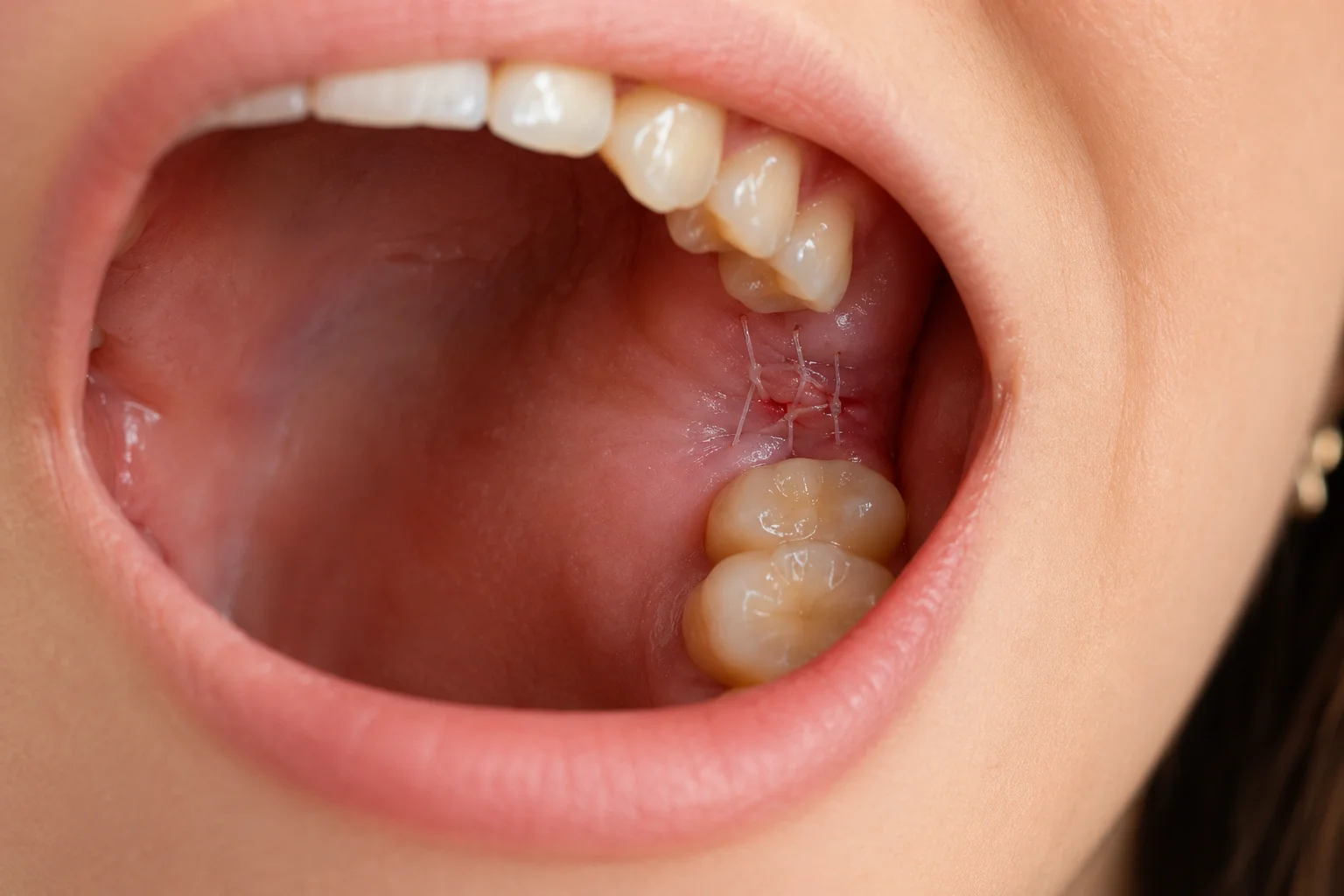
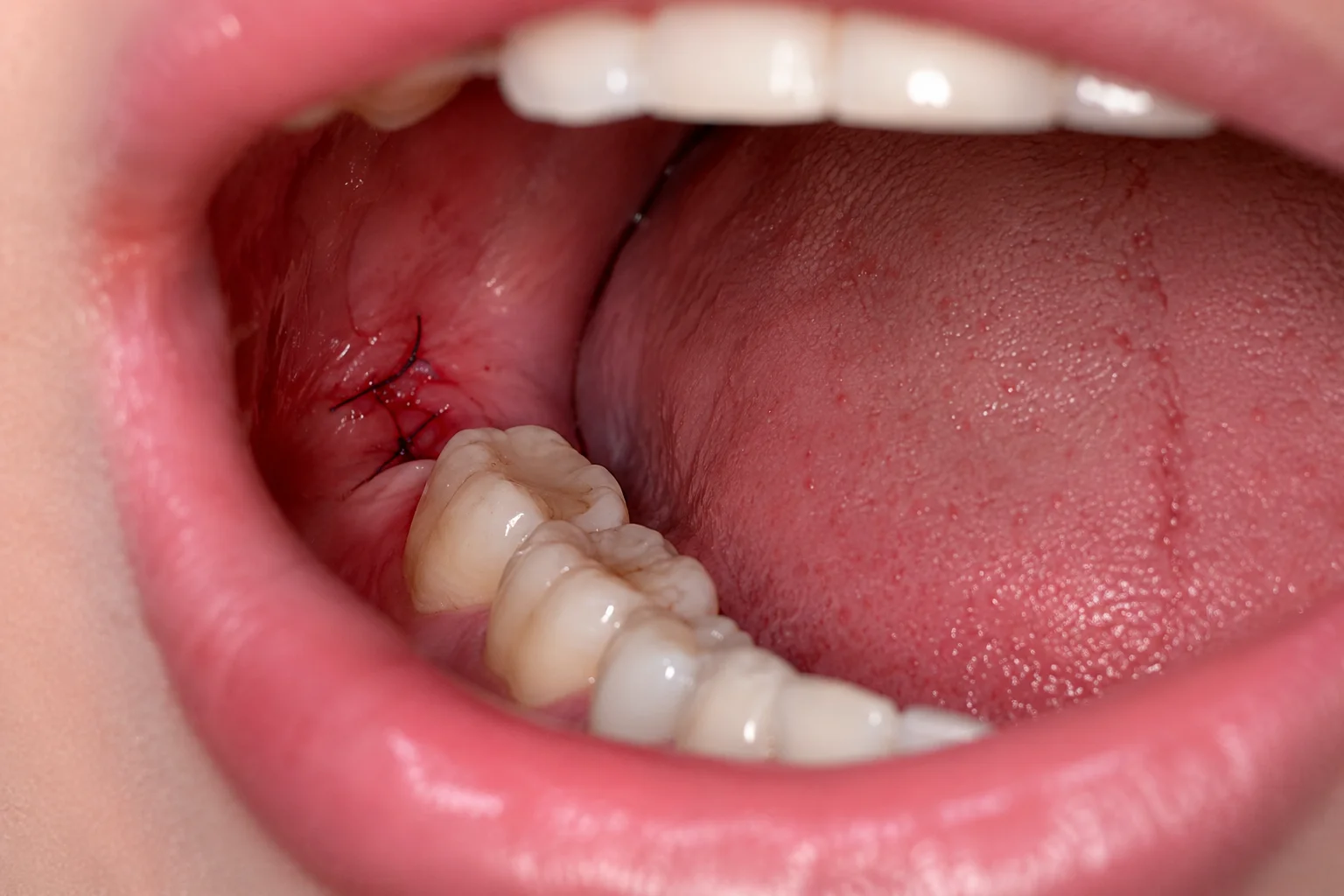
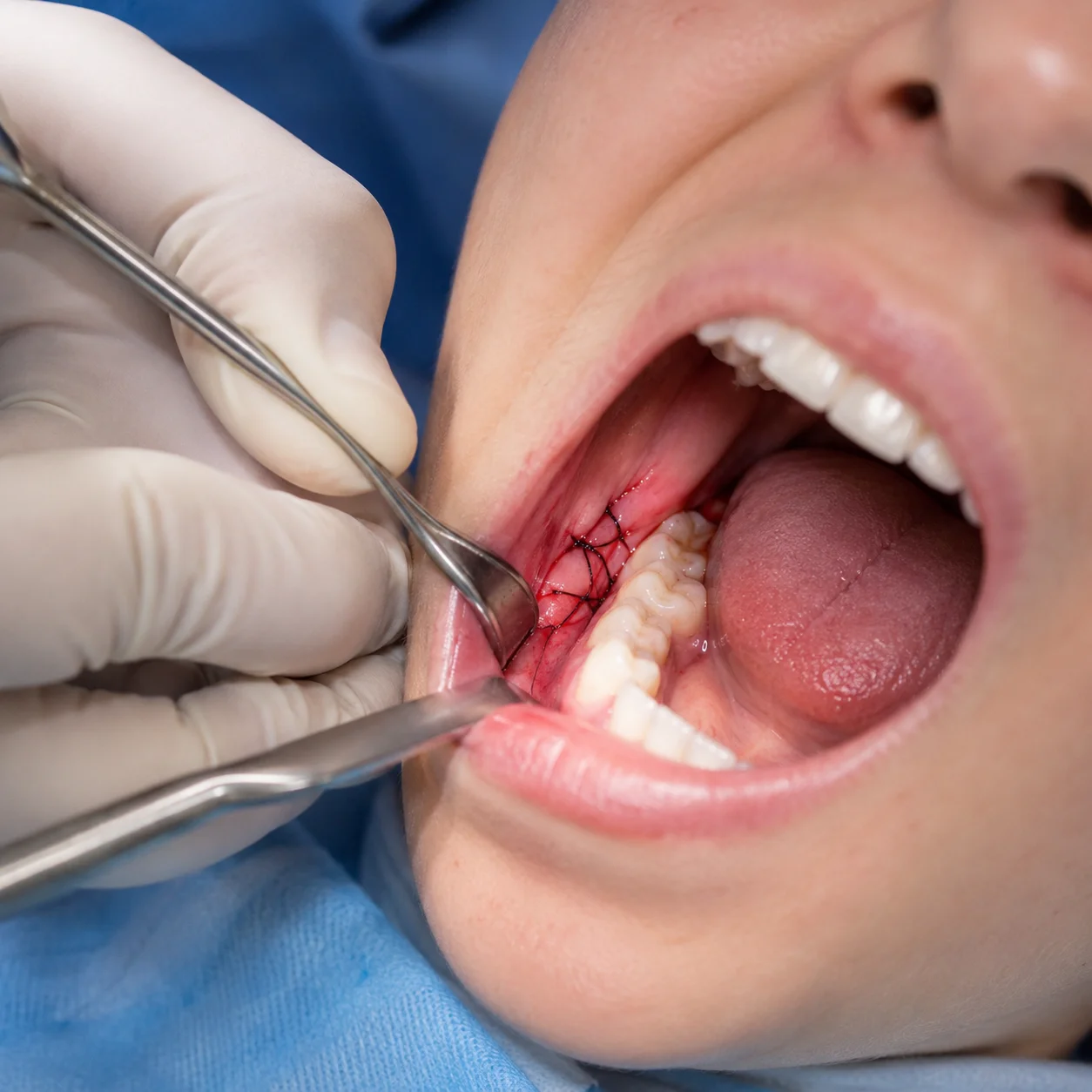

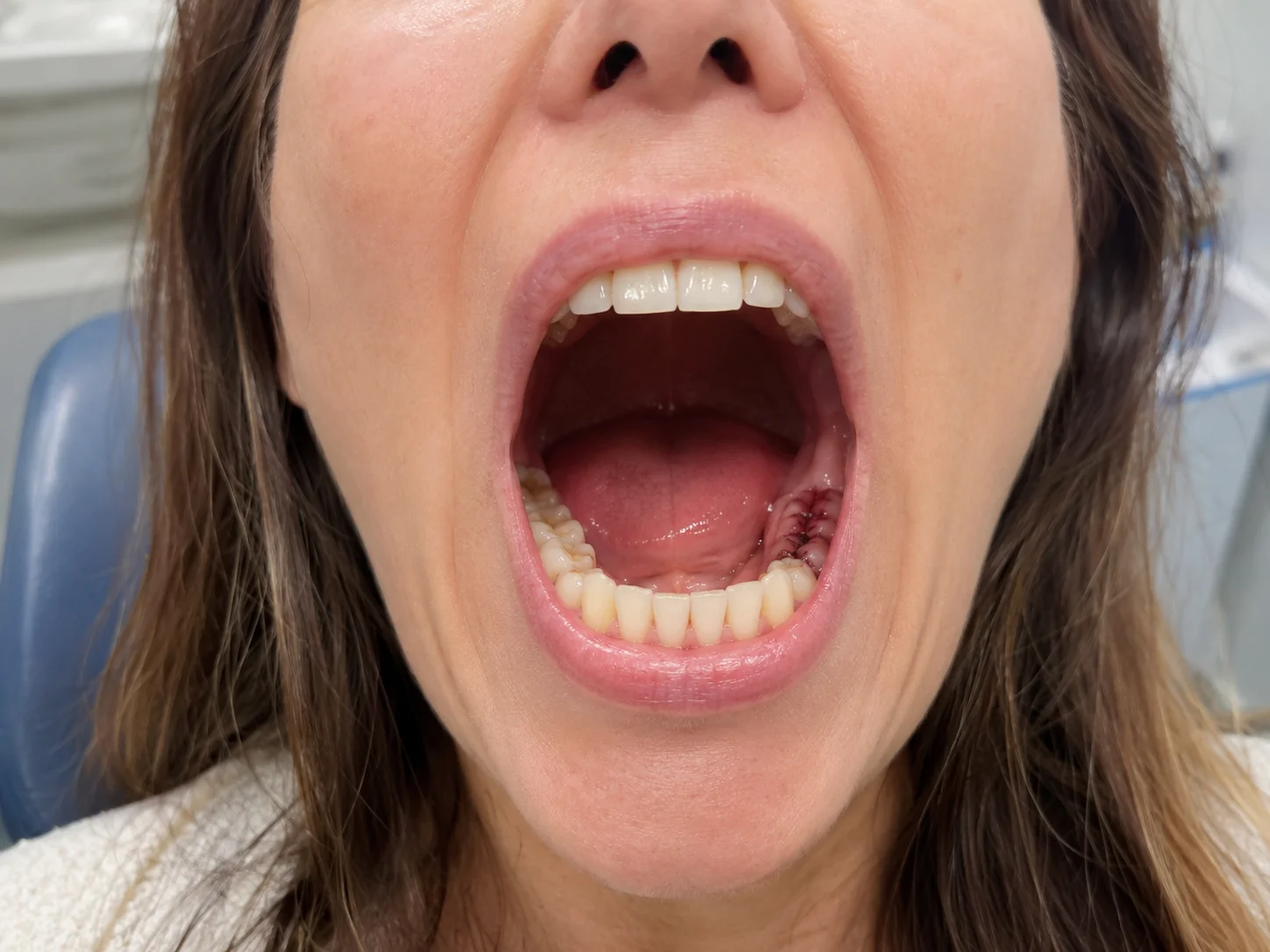
You’re rinsing your mouth or glancing in the mirror — and something looks different. The stitches from your wisdom tooth removal aren’t where they were. Maybe they’re completely gone. Maybe there’s just a loose thread hanging around.
Either way, it feels too soon.
That first reaction is usually panic. Even if nothing else feels wrong, a missing stitch after oral surgery doesn’t exactly feel like good news. When wisdom tooth stitches fell out, it can feel like something has gone wrong instantly.
But here’s what most people don’t know — dissolvable stitches in the mouth don’t follow a perfect schedule. The back of the mouth is constantly dealing with saliva, tongue movement, and chewing pressure.
So while it feels early, it isn’t always a problem.
Why wisdom tooth stitches fell out early
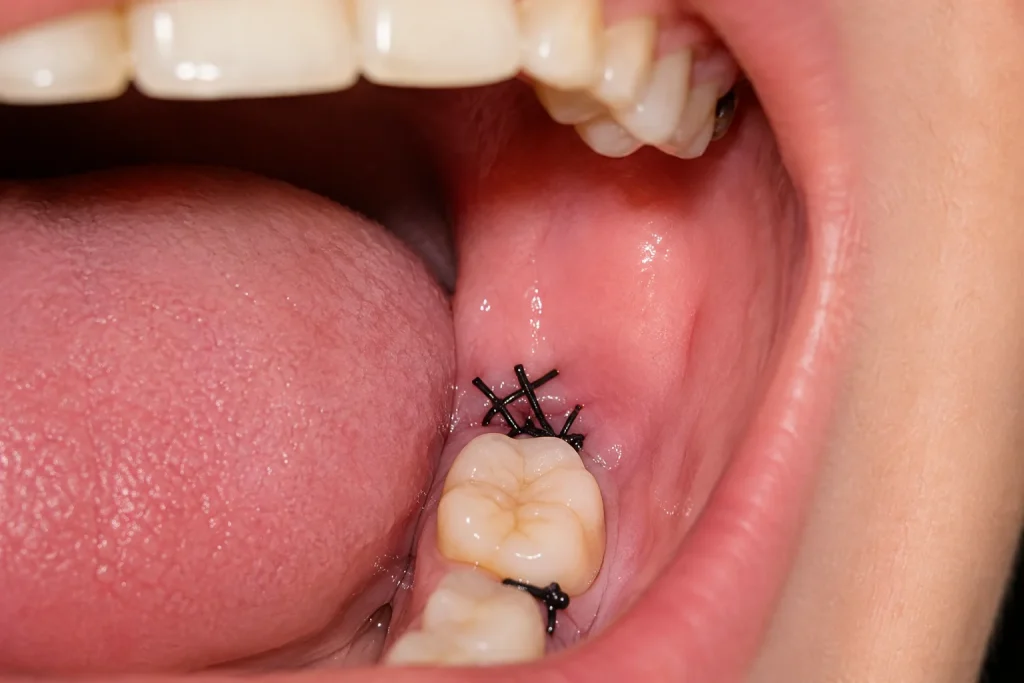
Wisdom tooth extraction sites are in a high-movement, high-moisture area. That alone makes stitches behave differently compared to other parts of the body.
A few common reasons they loosen early:
- Constant tongue contact without even realizing it
- Chewing pressure transferring to the back gums
- Saliva breaking down absorbable material faster
- Natural swelling shifting the thread position
- Sutures placed loosely for drainage or comfort
In many cases, what looks like “early failure” is actually just the body doing what it normally does in the mouth.
But not every situation is harmless.
When early stitch loss is actually okay
There are situations where stitches falling out early doesn’t change much.
If:
- bleeding has already stopped
- pain is gradually improving
- the socket looks stable (no widening or fresh bleeding)
- no visible gap is opening in the gum tissue
The deeper healing after wisdom tooth removal doesn’t depend entirely on stitches after the first few days. The clot inside the socket does most of the early work.
The body often continues healing in the background without interruption even when wisdom tooth stitches fell out earlier than expected.
When it’s not normal anymore
Things get more concerning when early stitch loss is paired with changes in the wound.
Watch for:
- fresh or persistent bleeding
- increasing pain after initial improvement
- visible opening of the extraction site
- bad taste that doesn’t go away
- swelling that starts getting worse instead of better
If anything feels like it’s reversing instead of improving, that’s usually the point where a dentist should take a look.
Should you try to replace or adjust the stitches?
No. Not at home.
Once stitches come loose or fall out, trying to reposition them yourself can irritate the healing site or introduce bacteria.
Even if a strand is hanging loosely, it’s usually better left alone unless it’s physically bothering you (like poking the cheek or trapping food). In that case, a dentist can trim it safely in seconds.
What you should do immediately
If your wisdom tooth stitches fell out early but everything feels stable, the main focus shifts to protection.
Keep things simple:
- rinse gently with warm salt water
- avoid forceful spitting
- stick to soft foods for a few more days
- avoid chewing on that side
- keep oral hygiene, but be gentle around the area
Even small habits like aggressive rinsing can interfere more than missing stitches themselves.
Why the mouth is different from other wounds
The oral cavity heals fast, but it’s also constantly active.
Unlike skin wounds, the inside of the mouth is constantly exposed to saliva enzymes, bacteria, temperature changes, and regular movement from talking and chewing, which all make healing more active and sometimes less predictable.
That’s why dissolvable stitches used in dental implant surgery behave unpredictably here. They’re not meant to act as long-term support. They’re more like temporary guidance for the tissue while it settles.
Once that early phase is over, the gum tissue starts holding itself together naturally.
What dentists usually expect after wisdom tooth stitches fall out
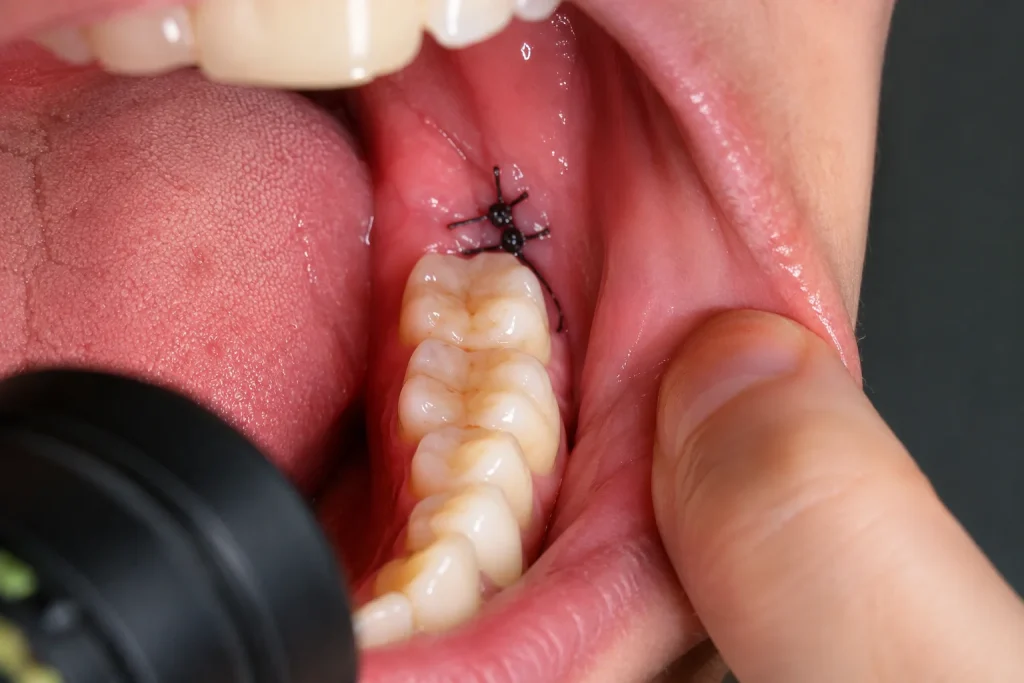
Dentists don’t rely solely on sutures for healing wisdom teeth. They evaluate healing by looking at how clean the socket is, checking whether the blood clot is still intact, observing how the surrounding gum tissue is closing over time, and monitoring the patient’s overall comfort and recovery progress.
In many routine extractions, stitches are already partially dissolving or loosening by the time the first follow-up would even happen.
So early loosening isn’t automatically a red flag. Context matters more than timing.
A small but important warning
Even if everything seems fine, avoid checking the site constantly with your tongue or fingers. It’s one of those habits that feels harmless but can delay healing without you realizing it.
Also, avoid smoking or using straws during early healing. The suction effect is still one of the most common causes of complications after wisdom tooth removal.
When to call a dentist
Reach out if:
- stitches come out and pain suddenly increases
- bleeding restarts after stopping
- swelling gets worse after day 3–4
- there’s a foul taste or discharge
- the socket looks visibly open or empty
A quick check is usually enough to rule out complications. In some cases, no treatment is needed at all—just reassurance and monitoring.
Healing doesn’t depend only on stitches
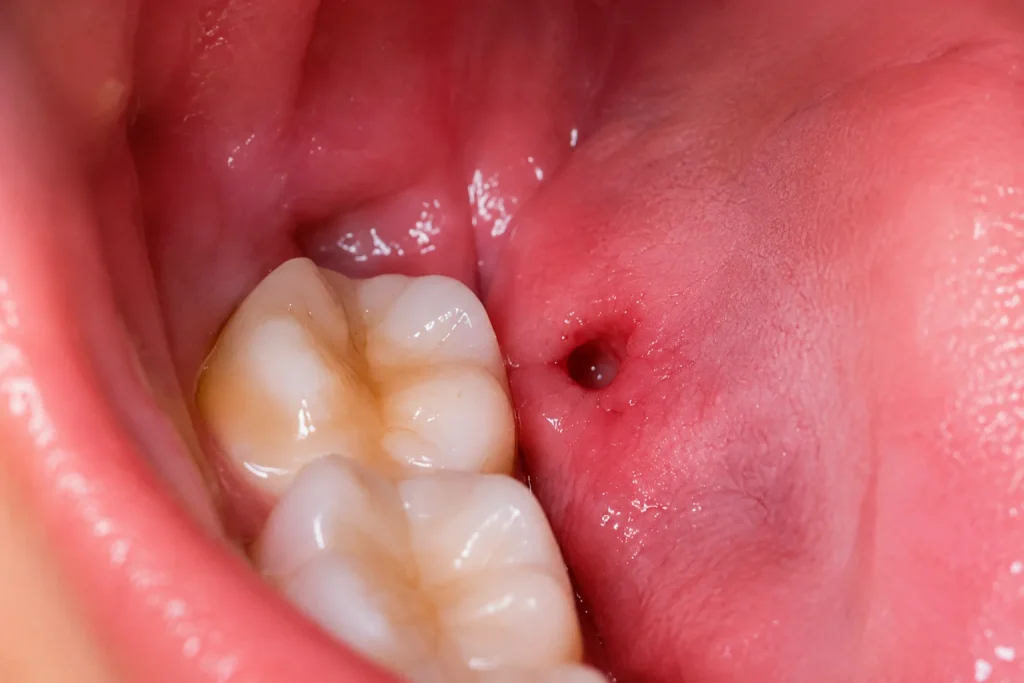
It’s easy to assume stitches are holding everything together, but most of the real healing happens underneath.
Once the initial clot stabilizes, gum tissue slowly starts covering the area from the edges inward. Stitches just help guide that process in the early phase.
So even if wisdom tooth stitches fell out early, the body often continues without much disruption.
Still, watching the symptoms—not just the stitches—is what actually tells you how things are going.
The Bottom Line
Wisdom tooth stitches fell out earlier than expected feels alarming — but in most cases, it isn’t. They guide the tissue early on, and once that window passes, your body takes over. If you’re unsure, a quick check at South Shore Dentistry & Implants can help confirm that healing is going normally.
What actually matters is what’s happening in the socket — not whether a thread is still visible. If the bleeding has stopped, pain is gradually easing, and nothing feels like it’s getting worse, chances are your healing is on track with or without the stitch.
Worsening pain, fresh bleeding, a bad taste that lingers, or a socket that looks open — those are the real signals that something needs attention. Don’t wait too long if any of those show up.
In the meantime, keep it simple. Rinse gently, eat soft foods, stay away from straws, and resist the urge to constantly check the site with your tongue.
FAQs
1. Is it normal for wisdom tooth stitches to fall out early?
Yes, it can be normal. Dissolvable stitches in the mouth often loosen or fall out early due to saliva, tongue movement, and chewing pressure. In many cases, healing continues normally without them.
2. How long do wisdom tooth stitches usually last?
Most dissolvable stitches last 7 to 14 days, while some types like Vicryl can last up to 2 to 4 weeks before fully dissolving.
3. What should I do if my stitches fall out after wisdom tooth removal?
If there is no bleeding, worsening pain, or opening of the gum, you usually don’t need to do anything. Keep the area clean with gentle saltwater rinses and avoid disturbing the site.
4. Can stitches falling out affect healing?
Not usually. Most early healing after wisdom tooth removal is controlled by the blood clot inside the socket, not the stitches. However, proper care is still important to avoid complications.
5. When should I worry about stitches falling out?
You should contact your dentist if you notice:
- Increasing pain after initial improvement
- Fresh or persistent bleeding
- Swelling that worsens after 3–4 days
- Bad taste or discharge
- A visibly open or empty socket
6. Can I replace or fix the stitches myself?
No. You should never try to adjust or replace stitches yourself. This can disturb healing and increase the risk of infection.
7. Why do wisdom tooth stitches come loose so easily?
The back of the mouth is a high-movement, high-moisture area. Constant saliva flow, chewing, and tongue contact can cause stitches to loosen earlier than expected.