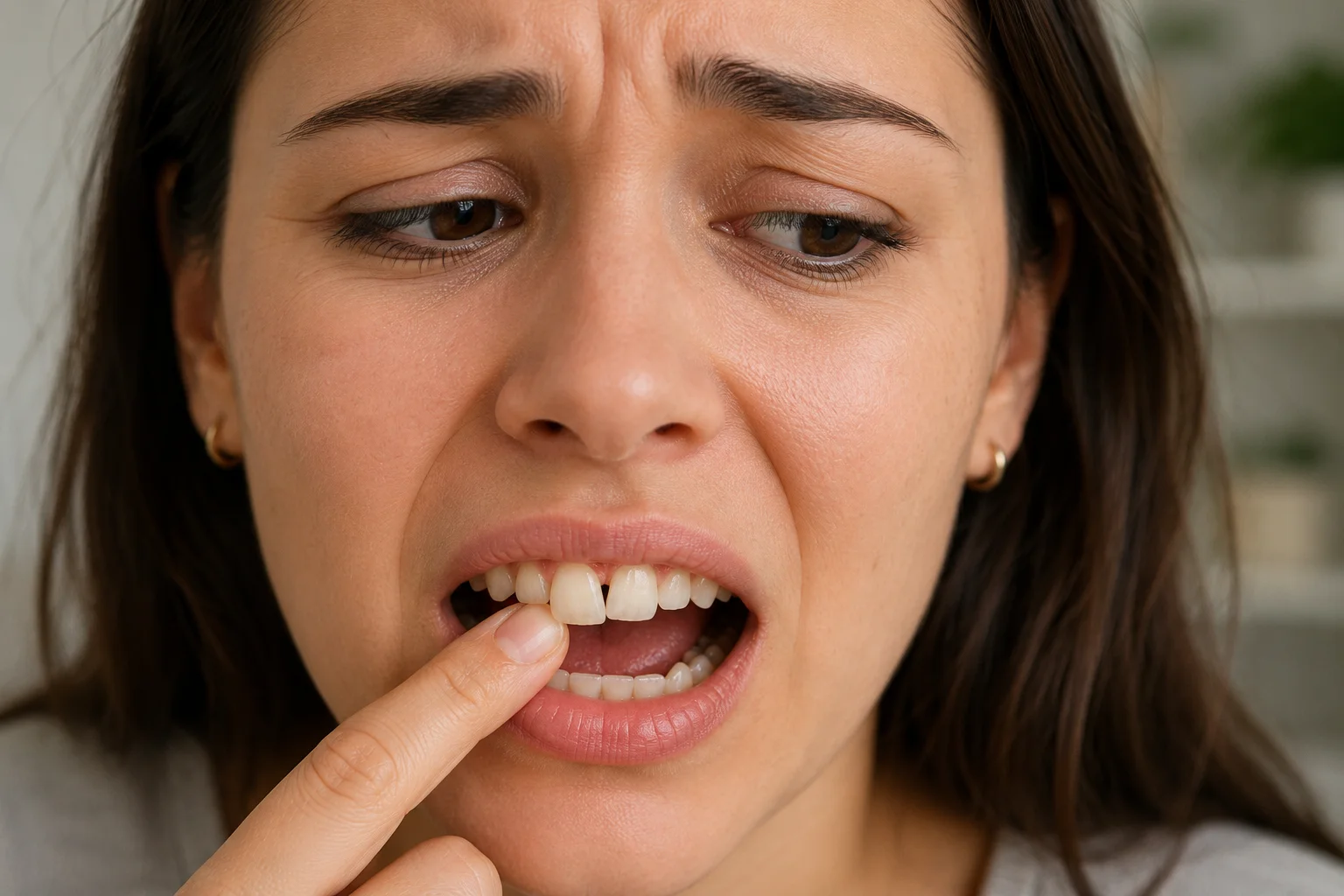

Getting a tooth pulled is stressful enough. Then your dentist says they’ve placed dissolvable stitches — and suddenly you’re wondering what that actually means for your recovery. Do you leave them alone? Will you feel them? What if they’re still there two weeks later?
The truth is, most patients leave the dental chair with very little information about what to expect day by day. This guide fills that gap. From the moment the anesthesia wears off to the point your mouth is fully healed, here’s a clear, honest breakdown of what happens — and what you should (and shouldn’t) do along the way.
Why Dentists Use Dissolvable Stitches After Extractions
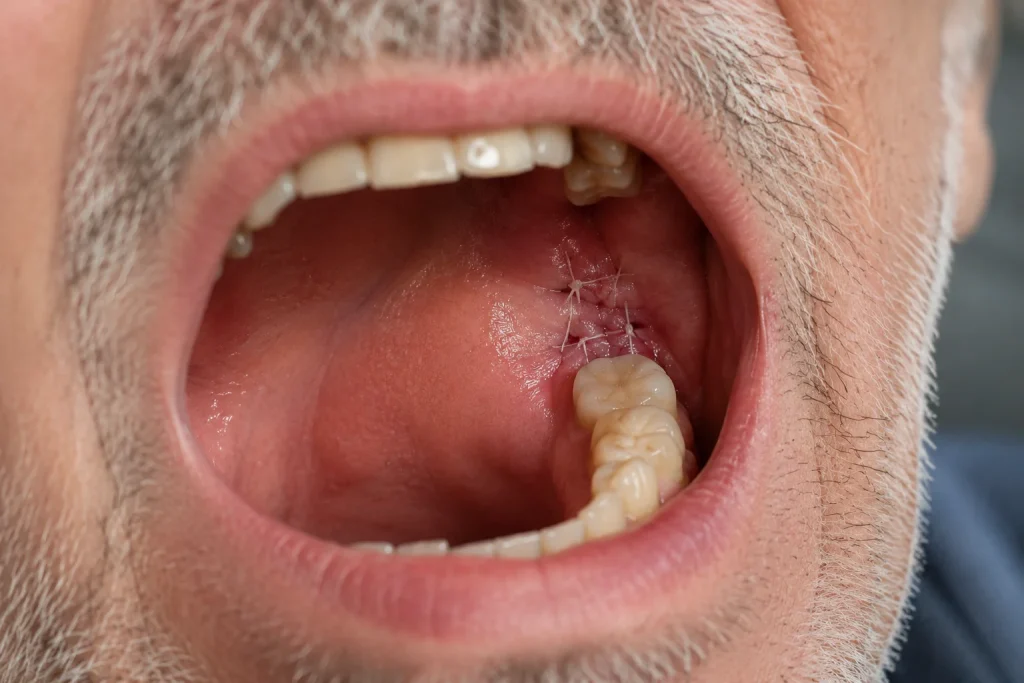
Not every tooth extraction requires stitches. A simple extraction — where the tooth comes out cleanly and the socket closes on its own — often doesn’t need them. But surgical extractions are different.
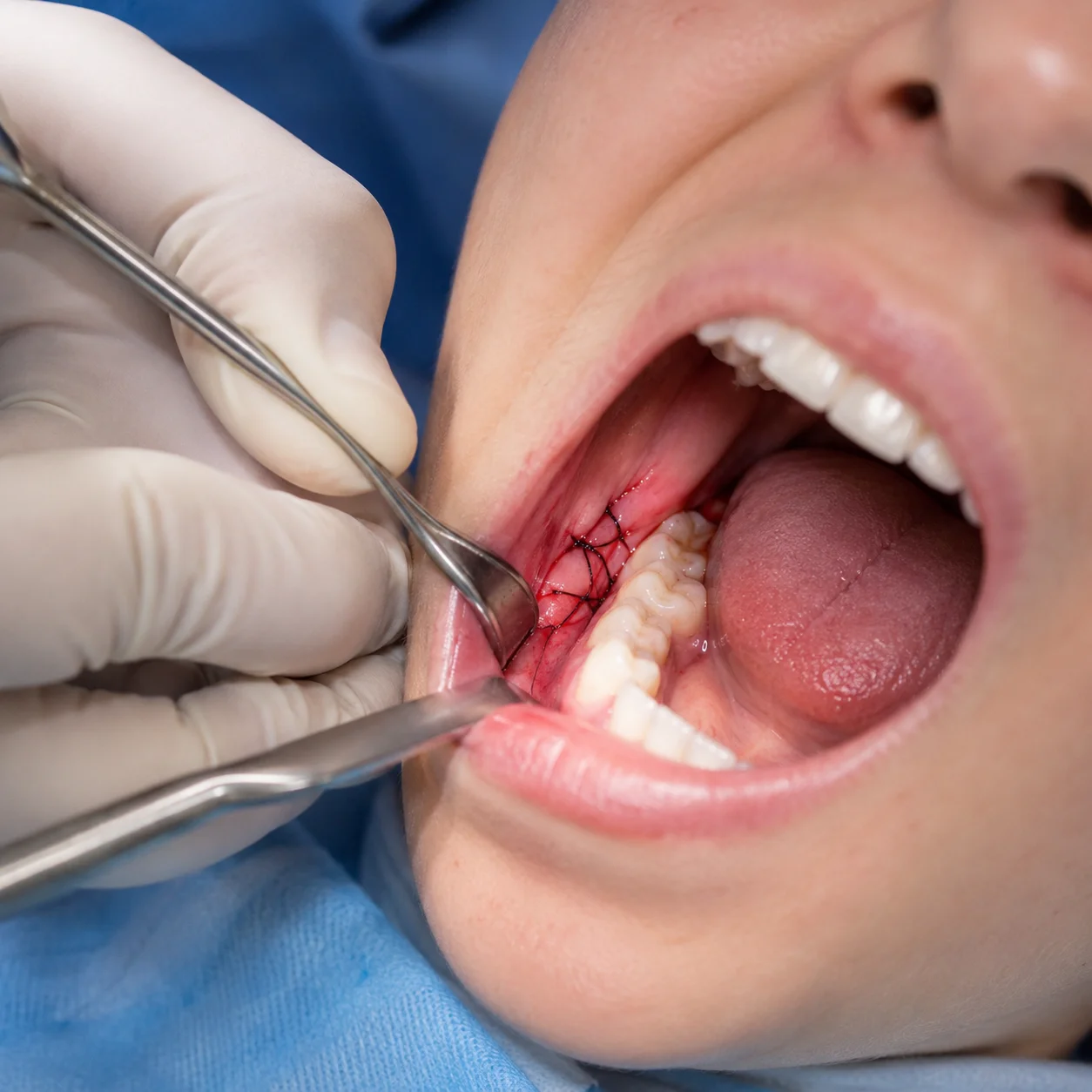
When a tooth is stuck, broken at the gum line or the dentist needs to cut through gum tissue to get to it stitches are usually needed. They keep the gum flap in place, make the open socket smaller and help the tissue heal properly. This helps the gum tissue heal in the spot.
Dissolvable stitches are commonly used in the mouth because they don’t require a second visit for removal, the moist oral environment helps them break down naturally, and they typically last just long enough for the tissue to regain strength before disappearing on their own.
Types of dissolvable stitches used in dentistry
Not all dissolvable stitches behave the same way. Dentists choose them based on how long the tissue needs support and where the wound is located.
1. Chromic gut sutures
These things are really common in oral surgery. They are made from a kind of collagen that comes from animal intestines. This collagen is cleaned up. Then treated so that it does not get absorbed by the body too quickly.
They tend to last around 7 to 14 days in the mouth, sometimes slightly longer. They’re often used for simple extractions or minor gum procedures where long-term support isn’t necessary.
They can feel a bit rough or “stringy” in the first few days, which catches some patients off guard.
2. Plain gut sutures
These break down faster than chromic ones. In a moist environment like the mouth, they may start loosening within 5 to 7 days.
Dentists sometimes use them when quick healing is expected or when minimal tension is placed on the wound.
They’re practical, but not ideal for areas that need extended stability.
3. Synthetic absorbable sutures (Vicryl-type)
These are the options. They are made from things, like polyglactin. This means they keep their shape for a time and break down in a more predictable way.
Depending on thickness and placement, they can last anywhere from 2 to 4 weeks, sometimes even longer in deeper tissues.
They’re often preferred in dental implant surgery or more complex extractions because they keep their strength for a longer period before gradually breaking down.
Days 1 to 3: Swelling, Sensitivity, and Staying the Course
This is typically the most uncomfortable stretch of recovery. Swelling usually peaks around 48 hours after the extraction, which catches some patients off guard — they feel okay on day one and worse on day two.
The stitches are holding the tissue together during this window. Do not touch the area with your tongue. Also do not look at the area too closely with a mirror and a flashlight. The stitches and the tissue need time to heal. Touching the clot or disturbing it at this point is a reason why people have problems with their healing. You need to be careful with them.
What to eat: Soft, cool foods work best. Yogurt, applesauce, scrambled eggs, mashed potatoes, smoothies (no straw). Avoid anything hot — temperature can increase blood flow and promote bleeding. Avoid hard, crunchy, or chewy foods that require your jaw to work too hard near the extraction site.
Oral hygiene: Keep brushing your other teeth normally, but be gentle around the extraction site. Most dentists recommend avoiding direct brushing over the socket for the first few days. You can gently rinse with warm salt water starting around 24 hours post-extraction — half a teaspoon of salt in a glass of warm water, tipping your head to let it reach the area rather than actively swishing.
Days 3 to 7: Tissue Starts Knitting Together
By day three or four most patients start to feel much better. The swelling starts to go. The sharp pain becomes an ache. The socket does not look as raw as before. Most patients notice the changes.
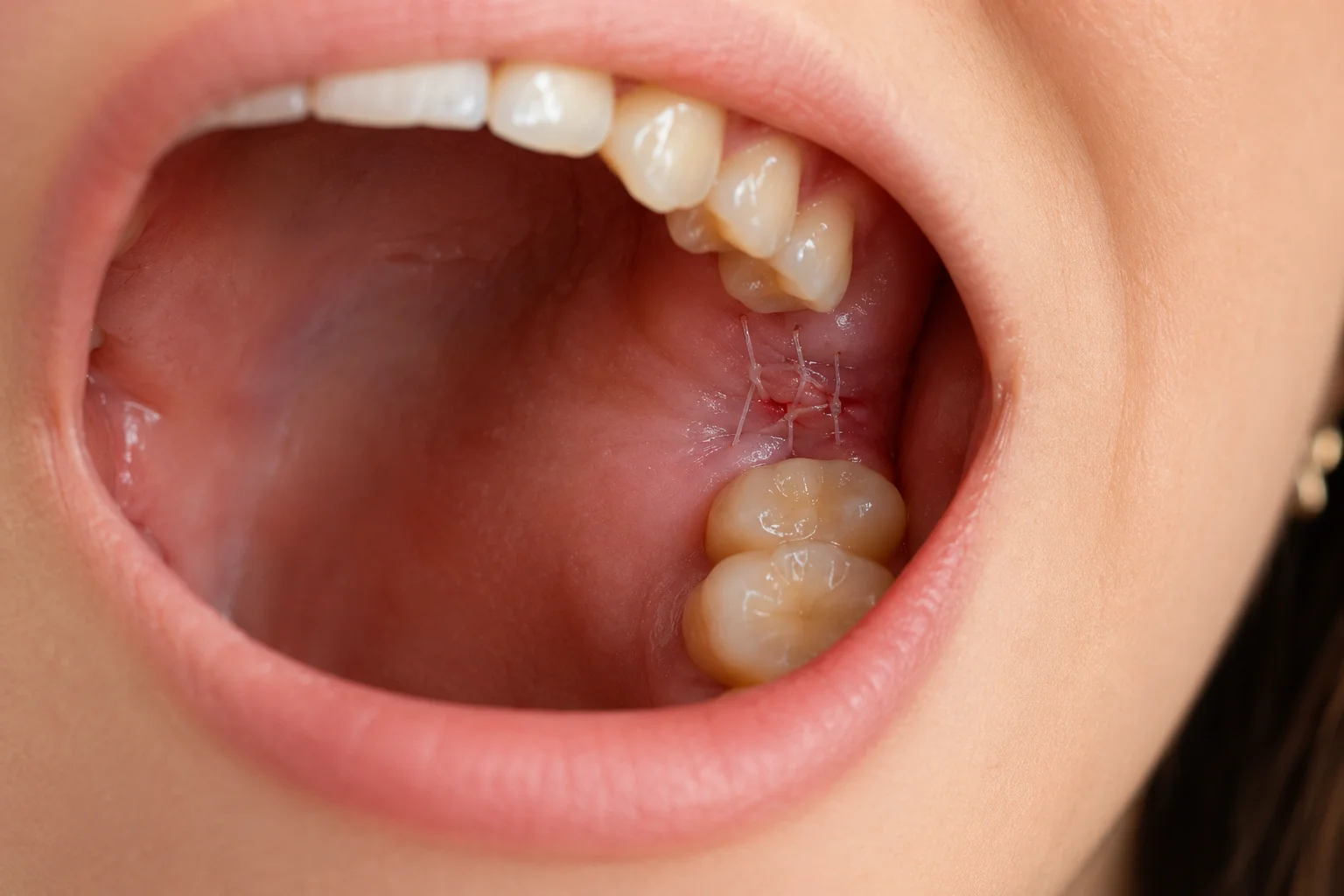
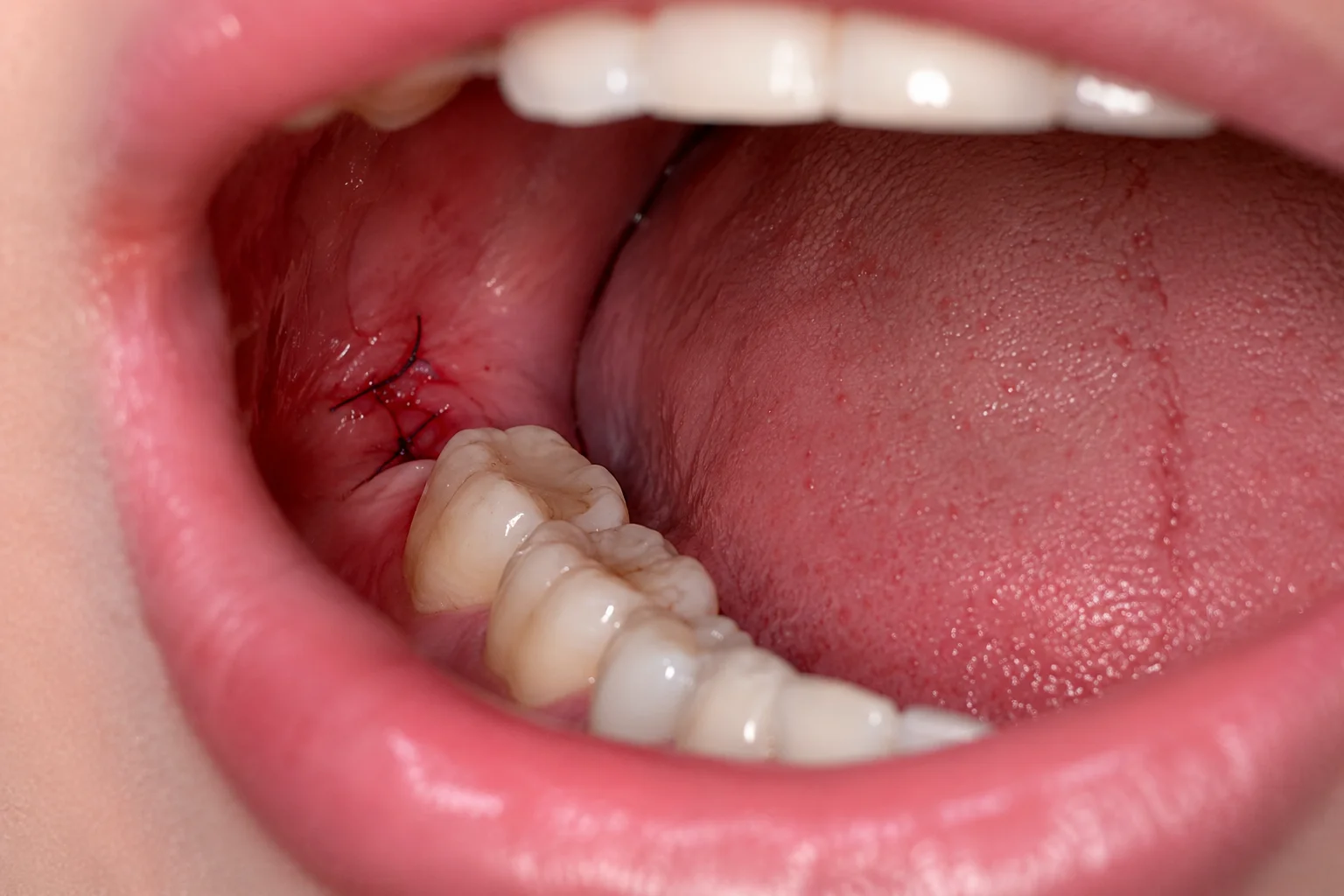
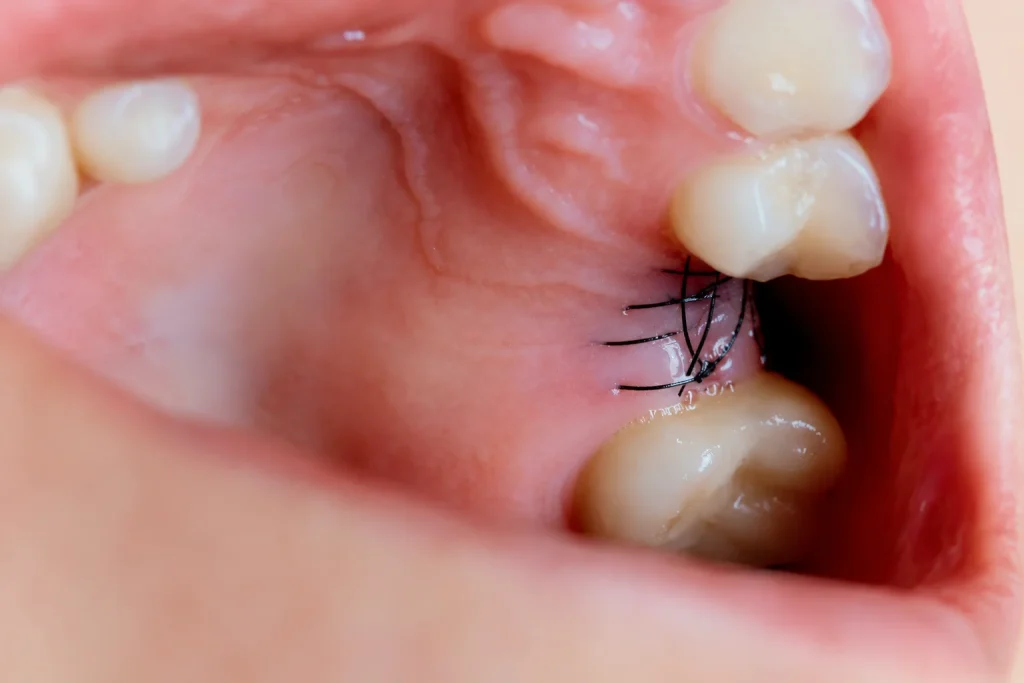
This is when you might first notice the stitches. As the swelling reduces, the suture knots or threads can become more visible — sometimes poking slightly above the gum line. That’s normal. You might feel a small thread with your tongue. It’s tempting to fiddle with it. Don’t.
The tissue underneath is actively healing during this week. New cells are migrating across the wound, granulation tissue is forming, and the socket walls are beginning to fill in. The stitches are still providing meaningful support, even if the wound looks like it’s doing fine.
A note on taste and sensation: Some patients notice a slightly unusual taste or mild odor around the extraction site during this period. A little of this is normal — it’s the healing process. But a strong, persistent bad taste combined with worsening pain (especially if the socket looks empty rather than filled with dark clot material) could signal dry socket. Contact your dentist if that’s the case.
Salt water rinses can be slightly more active now — a gentle swish after meals rather than just a tip-and-let-sit.
Week 2: Stitches Beginning to Loosen
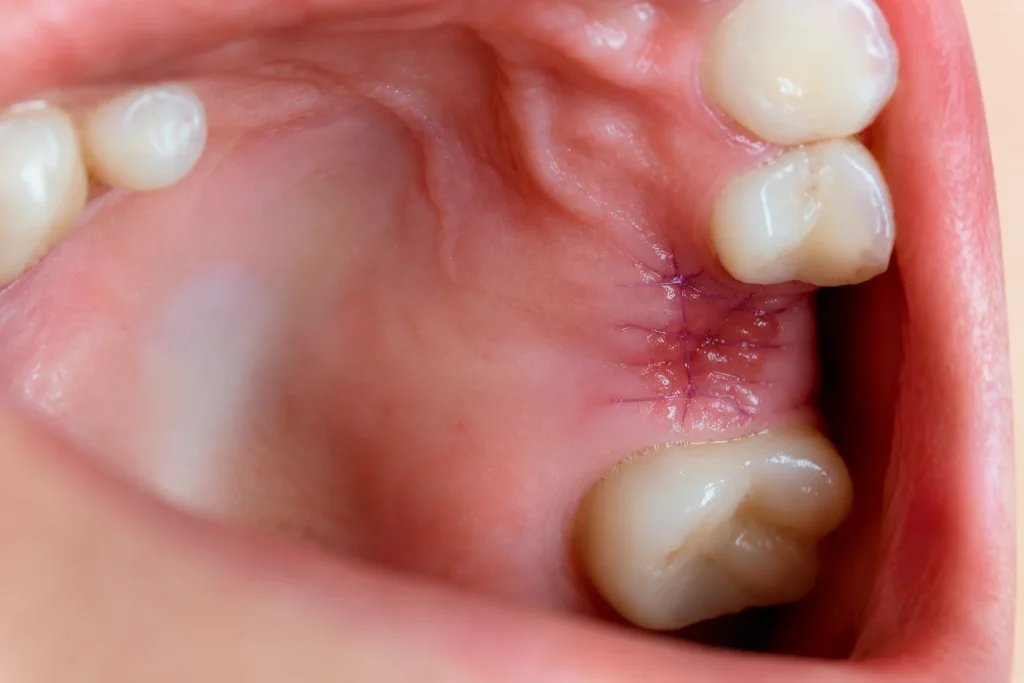
Around day 7 to 10, chromic gut sutures typically begin breaking down. You might notice the threads becoming looser, fraying slightly, or falling out in small pieces. This is completely normal — it means the material is degrading as intended.
Vicryl sutures take a bit longer to reach this stage, but you may still notice some softening or movement.
If a stitch falls out during this week, don’t panic. Check whether the wound looks closed. If the tissue edges are together and the area isn’t bleeding or open, the stitch has done its job. If the wound seems to be gaping or reopening, contact your dentist.
You’re generally safe to return to most normal foods by the end of week two, though your dentist’s specific guidance takes priority. Chewing on the opposite side of your mouth for a little longer isn’t a bad idea — the socket is still healing beneath the surface even when the visible wound looks closed.
Weeks 2 to 4: Full Dissolution and Surface Healing
For most patients who’ve had a simple surgical extraction, the visible stitches are gone by the end of week two. The gum tissue looks more or less normal, though slightly different in color or texture than the surrounding area.
But here’s what many patients don’t realize: the surface healing you can see is only part of the story. The socket beneath — the space where your tooth root sat — takes considerably longer to fully fill in with bone and new tissue.
Soft tissue closure at the surface: roughly 3 to 4 weeks. Initial bone fill in the socket: 6 to 8 weeks. Complete bone remodeling: 3 to 6 months, sometimes longer for larger extractions.
This matters if you’re planning a dental implant. Most oral surgeons want to see adequate bone density before placing an implant, which is why there’s typically a waiting period after extraction.
Any remaining Vicryl suture material that hasn’t been expelled will continue dissolving silently beneath the surface. You won’t feel it.
What If the Stitches Are Still There After 3 Weeks?
If you’re past the three-week mark and can still see or feel a suture, a few things might be going on.
It’s a Vicryl stitch taking its time
These can persist visibly for up to 30 days in some cases. If the wound looks healed and there’s no sign of infection, your body is just working at its own pace.
A “spitting” suture
Occasionally the body pushes a small piece of suture material to the surface rather than absorbing it. It looks like a tiny thread poking through the gum. It’s harmless, but it can be irritating. A quick visit to your dentist and they can remove it in seconds.
Mild inflammation around the suture
If the area looks slightly red or feels tender specifically around a visible suture knot, let your dentist know. Sometimes the material causes a minor local reaction that needs a little attention.
Don’t attempt to remove a stitch yourself with tweezers or scissors. Even if it looks accessible, you risk introducing bacteria or disturbing tissue that’s still healing underneath.
Signs That Something Isn’t Right
Most extractions heal without any drama. But it’s worth knowing what actually needs attention versus what’s just normal discomfort.
Contact your dentist if you notice:
- Severe pain that worsens after day 3 rather than improving
- An empty-looking socket with exposed bone (dry socket)
- Persistent bleeding beyond the first 24 hours
- Significant swelling that spreads to your jaw, neck, or cheek beyond day 4
- Fever above 38°C (100.4°F)
- Pus or thick discharge from the socket
- A wound that was healing and then reopened
Habits That Actually Slow Down Healing
A few things patients commonly do — without realizing the impact:
Smoking
This is a significant one. The suction from smoking can dislodge the blood clot, and the chemicals in tobacco impair the healing process and increase infection risk. Most dentists recommend avoiding smoking for at least 72 hours, ideally longer.
Alcohol
Can interfere with blood clotting and interact with pain medications. Best avoided for the first few days at minimum.
Vigorous rinsing or spitting
Even when you’re trying to keep things clean, forceful rinsing creates pressure that can disturb the clot and slow healing.
Eating on the extraction side too soon
It feels fine until it doesn’t. Give the socket adequate time before you start chewing on that side again.
Ignoring follow-up appointments
Even if you feel great, a post-extraction check lets your dentist confirm everything is on track — especially for complex extractions.
A Realistic Recovery Summary
| Timeframe | What to Expect |
| Day 1 | Numbness, controlled bleeding, clot forming |
| Days 2–3 | Peak swelling, soreness, rest and soft foods |
| Days 4–7 | Swelling reducing, stitches may become visible |
| Week 2 | Stitches loosening or falling out, surface healing underway |
| Weeks 3–4 | Gum tissue closing, most sutures fully dissolved |
| 6–8 weeks | Initial bone fill in socket |
| 3–6 months | Complete bone remodeling |
Conclusion
Recovery after a tooth extraction isn’t glamorous, but it’s also not as complicated as it can feel at the moment. Dissolvable stitches are a small but important part of that process — and for the most part, they handle themselves.
You don’t need to monitor them obsessively or check the mirror three times a day. What you do need is to follow the basics: eat soft foods, rinse gently, avoid smoking, and resist the urge to probe the area with your tongue. Most of the healing happens quietly beneath the surface, on a timeline your body controls.
If you have concerns about your healing progress or notice anything unusual, the team at South Shore Dentistry & Implants can evaluate the extraction site and make sure recovery is on track.
The sutures will loosen, break down, and disappear — usually within one to three weeks for the visible threads. The socket beneath takes longer to fully fill in, and that’s okay. Bone remodeling isn’t something you’ll feel or see, but it’s happening.
What trips most patients up isn’t the stitches themselves — it’s the anxiety around not knowing what’s normal. Hopefully this timeline has taken some of that uncertainty away. A little soreness in week one is normal. A stitch falling out in pieces around day ten is normal. Feeling mostly fine by week two is also normal.
FAQ’s
1. How long do dissolvable stitches last after a tooth extraction?
Most dissolvable stitches last between 7 to 14 days, but some types (like Vicryl sutures) can remain for 2 to 4 weeks before fully breaking down.
2. Is it normal for stitches to fall out or loosen?
Yes. It is completely normal for stitches to loosen, fray, or fall out as healing progresses. This usually happens around week 2 and means the material is breaking down as expected.
3. Should I remove dissolvable stitches myself?
No. You should never try to remove stitches on your own. Pulling or cutting them can disturb healing tissue and increase the risk of infection.
4. Why can I feel or see the stitches in my mouth?
As swelling reduces, stitches may become more visible or slightly poke above the gum line. This is normal and usually temporary during the healing process.
5. What is a “spitting suture”?
A spitting suture happens when the body pushes a small piece of stitch material to the surface instead of absorbing it. It may look like a tiny thread but is usually harmless and can be easily removed by a dentist.
6. What should I do if a stitch falls out early?
If the wound looks closed and there is no bleeding or opening, there is usually nothing to worry about. If the area looks open or painful, you should contact your dentist.
7. When should I worry about stitches after a tooth extraction?
You should contact your dentist if you notice:
- Increasing pain after day 3
- Persistent bleeding
- Swelling that gets worse
- Signs of infection such as pus or fever
- An open or empty-looking socket