
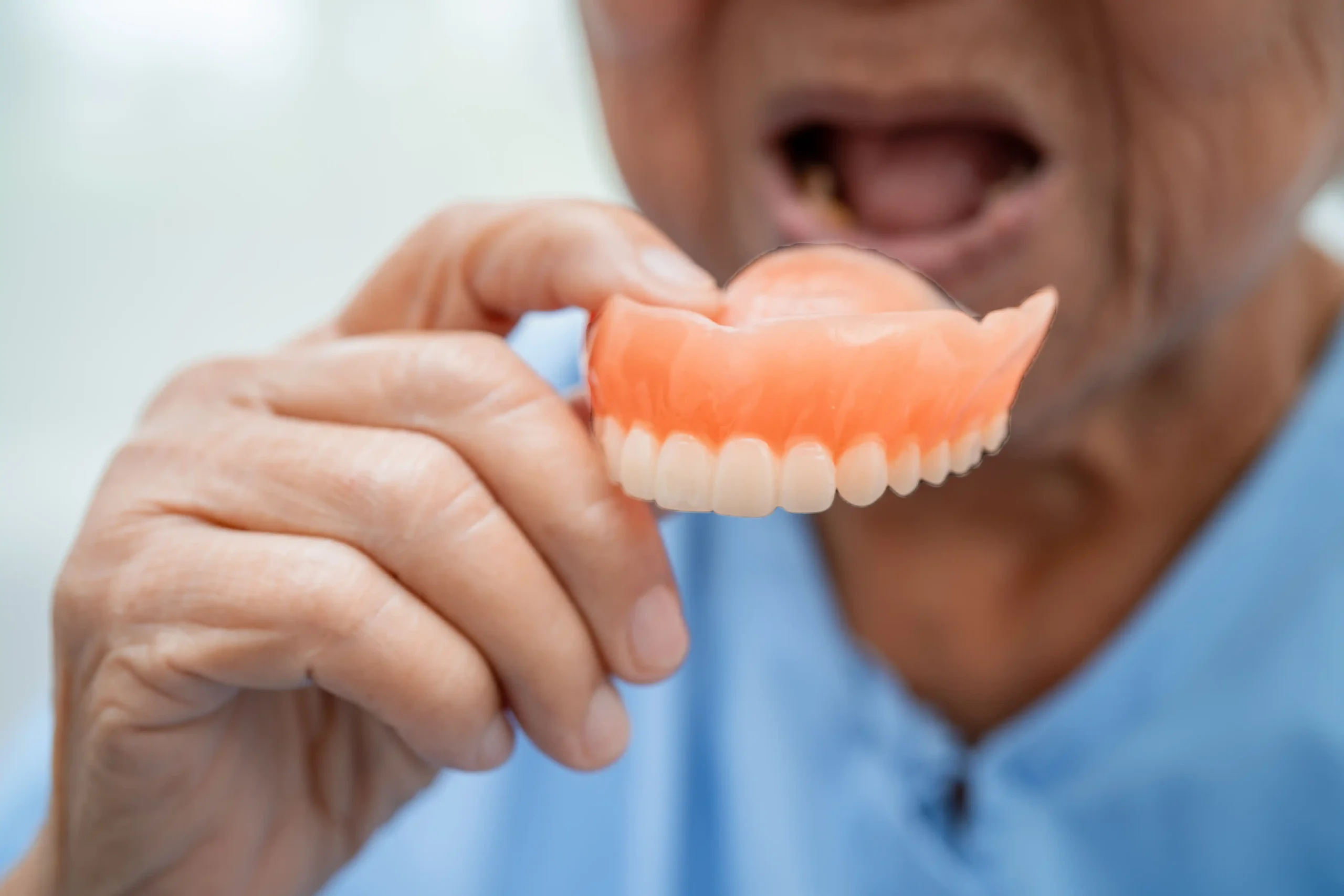
Tooth loss can affect how you eat, speak, and feel about your appearance. Dentures provide a practical way to replace missing teeth, restore oral function, and create a more complete smile. However, selecting dentures can feel confusing because several designs and materials are available.
The main types of dentures include complete, partial, immediate, implant-supported, and snap-in dentures. Each option serves a different purpose and varies in stability, appearance, maintenance, treatment time, and cost. Understanding these differences can help you prepare for a productive discussion with your dentist.
What Are Dentures?
Dentures are custom-made dental appliances that replace missing teeth and surrounding gum tissue. Depending on the design, they may replace several teeth, an entire upper or lower arch, or both arches. Some dentures are removable, while others are secured by dental implants.
Modern dentures are designed to resemble natural teeth and gums. Their fit, appearance, and performance depend on the condition of your mouth, the materials used, and how carefully the appliance is planned and made.
Although dentures are sometimes called false teeth, they do more than improve appearance. Properly fitted dentures can support facial structure, improve speech, and make it easier to eat a wider selection of foods.
What Are the Different Types of Dentures?
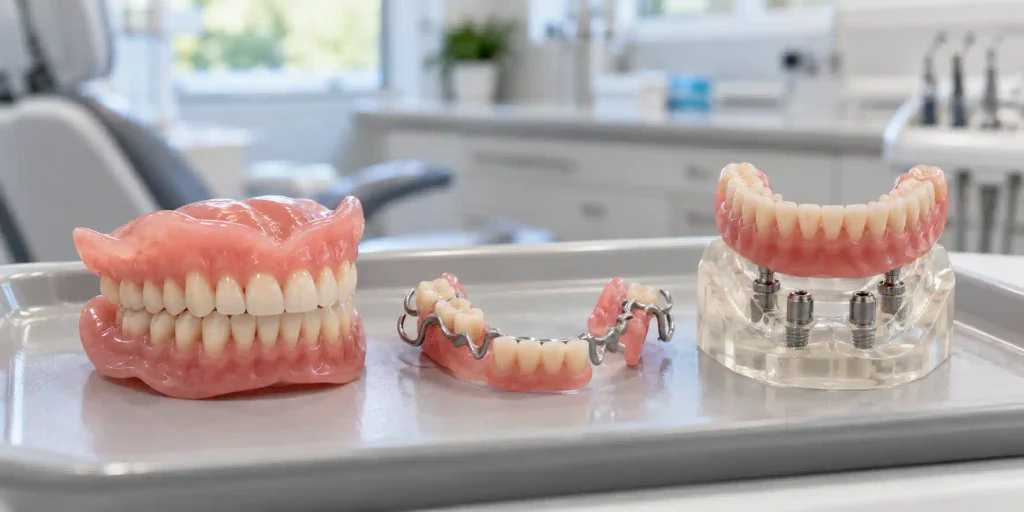
The right option depends on how many teeth are missing, whether healthy natural teeth remain, the condition of the gums and jawbone, and the patient’s budget. The most common denture types include:
- Complete dentures
- Partial dentures
- Immediate dentures
- Implant-supported dentures
- Snap-in dentures
- Overdentures
- Economy dentures
A dental examination is necessary before choosing between these different types of dentures. The dentist may assess the remaining teeth, gum health, bite, jawbone density, and long-term treatment goals.
Complete Dentures
Complete dentures, also known as full dentures, replace all the natural teeth in the upper jaw, lower jaw, or both. They consist of artificial teeth attached to a gum-colored base that rests on the gums.
Conventional complete dentures are usually made after the remaining teeth have been removed and the tissues have healed. This healing period helps the dentist create a more accurate fit, although the patient may temporarily be without teeth while the mouth recovers.
Upper dentures generally cover part of the roof of the mouth, while lower dentures have a horseshoe shape that leaves room for the tongue. Adhesive may improve retention for some patients, but a properly made denture should rely primarily on its fit and the anatomy of the mouth.
Partial Dentures
Partial dentures replace one or more missing teeth when healthy natural teeth remain. The replacement teeth are attached to a base that may be supported by a metal framework, flexible material, or acrylic structure.
Clasps or other attachments help hold the appliance in position. By filling spaces left by missing teeth, a partial denture may also help prevent nearby teeth from shifting.
Partial dentures are generally removable. They can be an appropriate option for patients who do not want surgery or who are not suitable candidates for dental implants. The appearance, strength, and cost depend on the material and design selected.
Immediate Dentures
Immediate dentures are placed on the same day that the remaining teeth are removed. They allow patients to avoid spending the healing period without visible teeth and may help protect the extraction areas during early recovery.
However, the gums and jawbone naturally change shape after extractions. As healing occurs, immediate dentures may become loose and require adjustments, relining, or eventual replacement.
These dentures are often considered a transitional solution rather than the final appliance. Patients should understand the expected follow-up care and additional costs before treatment begins.
Implant-Supported Dentures
Implant-supported dentures attach to dental implants placed in the jawbone. The implants provide stronger support than the gums alone, which can reduce movement while speaking and eating.
Depending on the treatment plan, the denture may be removable by the patient or fixed in place and removed only by a dental professional. Implant support can improve comfort and chewing ability, particularly for lower dentures that might otherwise move more easily.
This option requires sufficient jawbone and healthy gum tissue. Implant placement also involves surgery and a healing period. Some patients may require additional procedures before the final denture can be attached.
Snap-In Dentures
Snap-in dentures are removable appliances that connect to dental implants through special attachments. The denture “snaps” into place, providing improved retention while still allowing the patient to remove it for cleaning.
These dentures can feel more secure than conventional removable appliances. They may reduce slipping, improve confidence during meals, and minimize the need for denture adhesive.
The attachments can wear over time and may need to be replaced. Patients must also clean around the implants carefully to protect the gums and supporting bone.
Overdentures
An overdenture fits over remaining tooth roots or dental implants. Preserving suitable roots may help maintain the jawbone and provide additional support for the appliance. When natural roots cannot be retained, implants may serve a similar supporting role.
Overdentures may be complete or partial, depending on the number of missing teeth. Their stability and maintenance requirements vary according to the supporting structure and attachment system.
Not every remaining tooth is suitable for supporting an overdenture. The dentist must evaluate its strength, position, and long-term outlook before including it in the treatment plan.
Are Permanent Dentures Really Permanent?
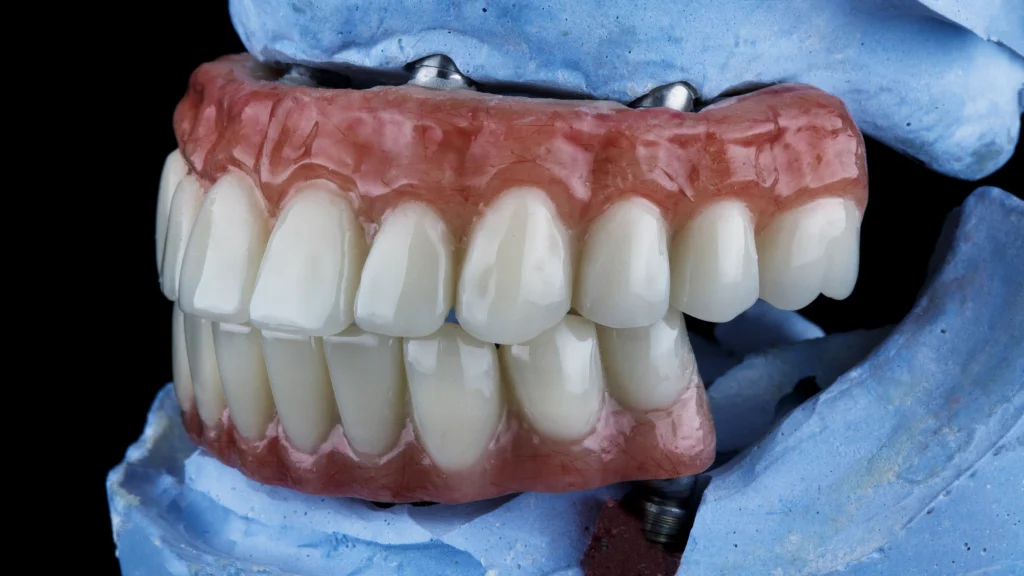
The term permanent dentures usually refers to a fixed implant-supported restoration. Unlike a conventional denture, this restoration stays attached to dental implants and cannot normally be removed at home.
Permanent options often provide greater stability and stronger chewing performance. They may also feel more similar to natural teeth because they do not rest entirely on the gums.
However, “permanent” does not mean the restoration will never require maintenance. Professional cleaning, routine examinations, and occasional repairs may still be necessary. The artificial teeth, attachment components, and supporting implants must be monitored throughout the patient’s life.
What Are Economy or Cheap Dentures?
Cheap dentures generally refer to basic or economy appliances made with less customization or more affordable materials. They may restore appearance and essential function at a lower initial cost, making them accessible to patients with limited budgets.
Price should not be the only consideration. An appliance that fits poorly can cause discomfort, gum irritation, difficulty eating, or frequent movement. A lower initial price may also be offset by adjustments, repairs, relining, or earlier replacement.
Patients comparing affordable options should ask what the fee includes. Important considerations include examinations, extractions, impressions, materials, follow-up visits, adjustments, relining, repairs, and warranties.
Comparison of the Main Denture Types
| Denture option | Best suited for | Removable? | Main benefit |
| Complete dentures | Patients missing all teeth in an arch | Yes | Replaces a full arch without implant surgery |
| Partial dentures | Patients with some healthy teeth remaining | Yes | Fills multiple gaps while preserving natural teeth |
| Immediate dentures | Patients undergoing extractions | Yes | Provides teeth during the healing period |
| Implant-supported dentures | Patients seeking improved stability | Sometimes | Greater support and chewing confidence |
| Snap-in dentures | Patients wanting removable implant retention | Yes | Secure fit with convenient home removal |
| Fixed permanent dentures | Patients wanting a non-removable option | No | Strong stability and natural-feeling function |
| Overdentures | Patients with suitable roots or implants | Usually | Uses existing support to improve retention |
Every option has advantages and limitations. A treatment that works well for one patient may not be appropriate for another.
Which Type of Denture Looks Most Natural?
The most natural-looking dentures are carefully customized to the patient’s face, gums, bite, age, and personal preferences. Tooth shape, size, shade, arrangement, and gum color all influence the final appearance.
Premium complete dentures and implant-supported restorations often allow more detailed customization. However, even a conventional denture can look natural when it is properly designed and fitted.
An excessively white or perfectly uniform appliance may appear less realistic. The goal is usually to create a balanced smile that complements the patient’s facial features.
Which Dentures Are Most Comfortable?
Comfort depends on fit, stability, gum health, saliva, bite alignment, and the patient’s ability to adapt. Implant-supported options are often more stable because the implants help prevent movement.
Conventional dentures can also become comfortable after an adjustment period. Mild tenderness and increased saliva are common when wearing a new appliance, but persistent pain, sores, or difficulty eating should be evaluated by a dentist.
Patients should never attempt to reshape or repair dentures at home. Improper alterations can damage the appliance and worsen the fit.
How Much Do Dentures Cost?
The cost of the different types of dentures varies according to the materials, level of customization, number of missing teeth, and additional procedures required.
| Denture type | General cost level | Factors affecting the cost |
| Complete dentures | Low to moderate | Materials, customization, and whether one or both arches are treated |
| Partial dentures | Low to moderate | Number of replacement teeth, framework material, and attachment design |
| Immediate dentures | Moderate | Extractions, temporary fit, follow-up adjustments, and relining |
| Economy or cheap dentures | Low | Basic materials, limited customization, and services included |
| Implant-supported dentures | High | Number of implants, surgery, imaging, attachments, and final restoration |
| Snap-in dentures | Moderate to high | Implant placement, attachment system, and maintenance needs |
| Fixed permanent dentures | High | Number of implants, restoration materials, laboratory work, and preparatory care |
What Are the Benefits of Dentures?
The benefits of dentures depend on their design, fit, and the patient’s oral health. Properly fitted dentures can provide several functional and cosmetic advantages, including:
- Replacing several or all missing teeth
- Improving chewing and eating ability
- Supporting clearer speech
- Restoring a fuller smile
- Supporting the cheeks and lips
- Reducing the sunken appearance caused by tooth loss
- Improving confidence in social situations
- Helping prevent remaining teeth from shifting
- Providing removable and implant-supported options
- Offering choices for different needs and budgets
How Long Do Dentures Last?
Many dentures last several years, but their lifespan depends on the materials, daily care, normal wear, and changes in the mouth. Over time, the gums and jawbone can change shape, affecting the fit even when the denture remains undamaged.
A denture may need adjustment or replacement if it slips, clicks, causes soreness, affects speech, or makes chewing difficult. Cracks, worn teeth, increased adhesive use, reduced facial support, and an uneven bite are also warning signs. Regular dental visits help determine whether a repair, reline, adjustment, or replacement is needed.
How to Care for Dentures
Proper cleaning helps reduce stains, odors, plaque, and gum irritation. Removable dentures should generally be rinsed after meals and cleaned daily with products and methods recommended by the dentist.
Patients should also clean their gums, tongue, remaining teeth, and implant attachments. Dentures should be handled over a folded towel or water-filled basin to reduce the risk of breakage if dropped.
Hot water may warp some denture materials. Abrasive household cleaners and improper repair products should also be avoided. Follow the dentist’s instructions regarding overnight wear and storage.
How to Choose the Right Type of False Teeth
Choosing among the available types of false teeth involves more than comparing prices. The dentist must consider oral health, remaining teeth, bone support, comfort expectations, appearance, lifestyle, and willingness to undergo surgery.
Patients should discuss the following questions during their consultation:
- How many teeth need to be replaced?
- Can any natural teeth or roots be preserved?
- Is there enough bone for implants?
- Will the appliance be removable or fixed?
- How long will treatment take?
- What maintenance will be required?
- What services are included in the cost?
- Are future adjustments or repairs expected?
These details make it easier to compare the available kinds of dentures and select an option that supports both immediate and long-term needs.
Find the Right Dentures for Your Smile
Choosing from the different types of dentures depends on your missing teeth, oral health, comfort expectations, lifestyle, and budget. Whether you need complete dentures, partial dentures, or a more stable implant-supported option, a professional examination can help determine which solution offers the right balance of appearance, function, and long-term value.
At South Shore Dentistry & Implants, we provide personalized denture care for patients in Cudahy, WI, and nearby communities. Our dental team will evaluate your needs, explain the available options, and help you choose a comfortable solution that restores your smile and confidence.
Frequently Asked Questions
What is the most common type of denture?
Complete and partial dentures are among the most frequently used options. Complete dentures replace all teeth in an arch, while partial dentures fill spaces when some natural teeth remain. The right choice depends on tooth loss, oral health, and treatment goals.
Can dentures be permanently attached?
Yes. Fixed implant-supported dentures are attached to dental implants and are not normally removed at home. They can provide strong stability and improved chewing function, but patients need sufficient bone, healthy gums, and ongoing professional maintenance.
What are the most affordable dentures?
Basic removable dentures are usually more affordable than implant-supported options. However, the lowest initial price may not provide the best long-term value. Patients should compare material quality, fit, adjustments, expected lifespan, and services included in the treatment fee.
Can I sleep while wearing dentures?
Dentists generally recommend removing removable dentures before sleeping. This gives the gums time to rest and allows the appliance to be cleaned properly. However, follow your dentist’s instructions because recommendations may vary during healing or after certain procedures.
How long does it take to get used to new dentures?
Most patients need several weeks to adjust to new dentures. Temporary soreness, increased saliva, and minor speaking or eating difficulties may occur initially. Follow-up adjustments can improve the fit and make the adaptation period more comfortable.