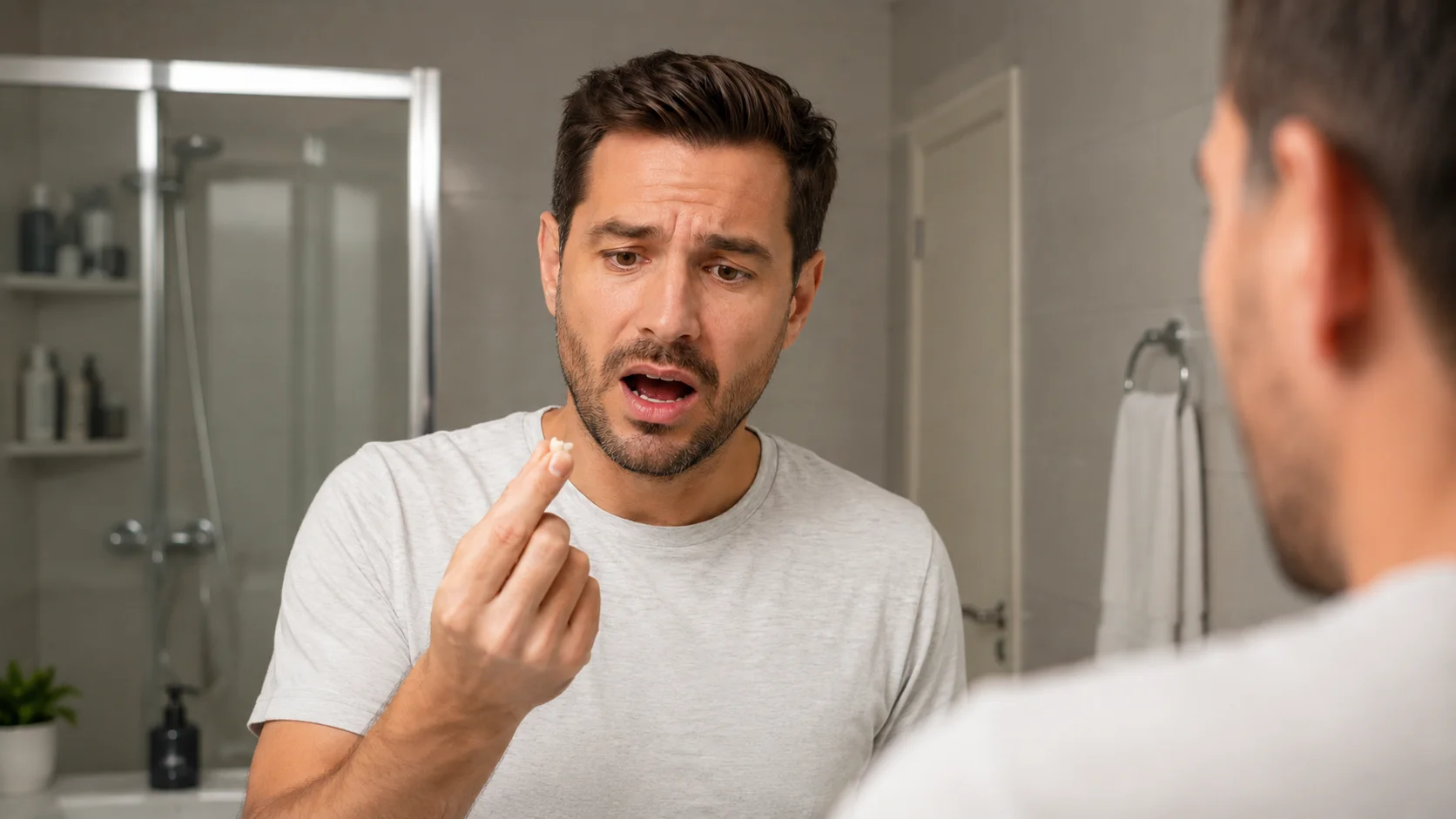
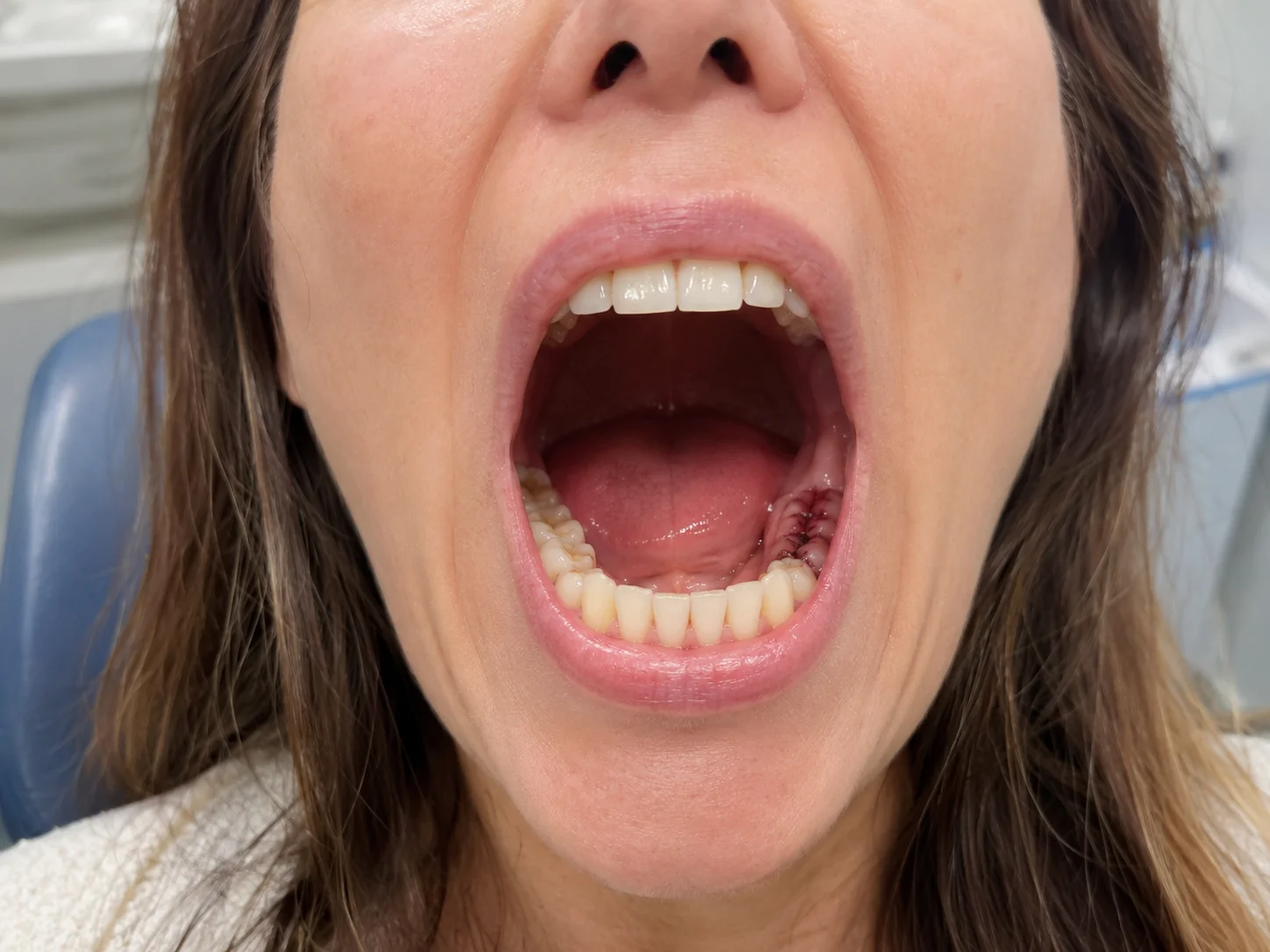

You run your tongue across a tooth. Something feels odd. You try it once more. The tooth moves again.
Well, that is unsettling.
Adult teeth are meant to stay put. Even a tiny wiggle can make your stomach drop. Most people check it several times. That reaction is normal. It is also a good reason to stop touching it. Each little test puts fresh pressure on tissue that may already be sore.
Here is the direct answer. You cannot safely tighten an adult tooth at home. A dentist needs to find the cause. The problem may sit in the gums. It may involve the jawbone. The ligament around the root may be hurt. Infection, an uneven bite, or a recent injury can also be at fault.
Home care still has a small job. It can protect the area until your visit. It can calm sore tissue. It may keep breakfast from turning into a painful mistake. What it cannot do is repair the support below the gumline. Lost bone will not grow back after a rinse. A cracked root will not seal itself. An injured tooth also needs proper support.
Stop testing the tooth with your tongue or fingers. Chew on the other side. Pick soft foods for now. Brush with a soft toothbrush. Use warm salt water if the gums feel sore. Skip glue, string, and homemade splints. Those ideas often turn one dental problem into two.
Early care gives the tooth a better chance. That is the part worth acting on. Call a dentist soon after you notice movement. Get urgent help after a fall or a blow to the mouth. Call if the tooth shifts out of place. Facial swelling needs fast care too. Heavy bleeding, fever, pus, and strong pain should never sit on tomorrow’s list.
Can You Tighten a Loose Tooth at Home?
No home remedy can safely tighten a loose adult tooth. Think about what holds a tooth in place. Gum tissue wraps around it. A thin ligament cushions its root. Jawbone supports the whole setup. Trouble in any one of those areas can cause movement.
A rinse cannot rebuild that support. A paste cannot replace bone. And a product from the kitchen cupboard cannot diagnose an injured root.
Still, a loose tooth is not always a lost tooth. Some teeth firm up after proper care. A tooth hurt in a minor accident may heal after a dentist moves it back and supports it. A tooth affected by gum disease may grow steadier after a deep cleaning. The swelling must also come under control.
The outcome depends on the cause. It also depends on the bone left around the root. Time plays a part too. A tooth checked today usually has more options than one ignored for three months.
Keep one idea in mind. Home care protects the tooth. Dental care treats the cause.
What to Do Right Now
The hours before an appointment can drag. You still need dinner. You still need to brush your teeth. And you probably want to do something right now. Fair enough. Use the steps below to lower irritation and limit extra movement.
- Leave the tooth alone. Each wiggle strains tender tissue. The urge to check it is real. Resist it.
- Choose soft food. Try eggs, yogurt, oatmeal, soup, soft pasta, fish, or mashed vegetables. Avoid nuts and hard bread. Skip ice, sticky candy, raw carrots, and chewing gum too.
- Use the other side. A soft meal can still hurt when each bite lands on the loose tooth. Move the work away from it.
- Keep your mouth clean. Brush slowly. Use a soft-bristled brush. Clean between the teeth with care. Do not snap floss into sore gums. Never force floss around a tooth that moves a lot.
- Try a warm salt-water rinse. Add about half a teaspoon of salt to eight ounces of warm water. Swish gently. Then spit. This may calm an irritated gum. It will not tighten the tooth.
- Call a dentist soon. Tell the office how the problem began. Mention any injury. Share every symptom. Pain, swelling, bleeding, fever, and a bad taste can change how quickly you need care.
These steps buy a little time. Nothing more. A loose adult tooth may barely hurt. That silence can feel reassuring. It should not. Gum disease often moves along without much noise. An infection may do the same. Damage from an accident can also hide under a tooth that looks normal in the mirror.
Do not wait for a dramatic toothache. Movement is already a warning.

What Not to Put on a Loose Tooth
Home fixes look tempting at 10 p.m. A loose tooth can make any quick trick sound reasonable. Most of those tricks are risky. Some burn the gum. Others trap germs or change the bite. A few make the dentist’s work harder the next morning. Avoid these common mistakes:
- Super glue, nail glue, denture adhesive, or household adhesive
- String, wire, fishing line, or a homemade splint
- Aspirin placed directly on the tooth or gum
- Undiluted oils or concentrated peroxide on the tissue
- Forcefully pushing a displaced tooth back into position
- Repeatedly checking the tooth by moving it
A real dental splint takes planning. The dentist checks the injury first. They look at the tooth’s position. They test your bite. They also check the teeth next door. A homemade version skips all of that. It may trap plaque. It may cut the gums. It can make your bite feel worse. It may also delay care that could save the tooth.
Why Is My Adult Tooth Loose?
The movement alone cannot tell you the cause. A small wiggle may come from a large problem. A tooth with clear movement may still have useful support. You cannot judge that with a phone flashlight. A dental exam clears up the picture. X-rays often fill in the missing part.
Gum disease and bone loss
Periodontitis harms the gums and bone around a tooth. Plaque starts the trouble. Hard tartar below the gumline keeps it going. A toothbrush cannot reach that buildup. The gum can pull away from the root. Small pockets then grow deeper. Bone may slowly disappear around the tooth.
You may see blood on your toothbrush. Your gums may look puffy. Bad breath may hang around. Pus can appear near the gumline. Your bite may suddenly feel different. Yet gum disease can stay quiet for a long time. Pain often arrives late.
An impact or dental injury
A fall can do it. So can a sports hit, a car accident, or an elbow to the face. The force can stretch the ligament around the root. It may even tear some fibers.
The tooth might feel sore. It could look crooked. It may move each time you bite. The white crown can still look perfect. That does not rule out damage. The root or nearby bone may be hurt where you cannot see it.
Teeth grinding or an uneven bite
Grinding loads the teeth again and again. Clenching does the same. Over time, that pressure can stress the tooth and its support.
A filling or crown can also sit a little too high. That tooth then takes the first hit each time the jaw closes. Morning jaw pain may offer a clue. Flat or worn enamel is another sign. Some people say one tooth feels taller than the rest. That odd feeling may show up before clear movement.
Infection
An infection can form near the root. It can also start in a deep gum pocket. Both can weaken the tissue around a tooth. Movement may follow.
Watch for throbbing pain. Look for swelling. A small bump may appear on the gum. Fever can develop. You may notice a foul taste. These signs need quick attention. Dental infections rarely fix themselves. Pain may fade for a while. The infection can remain.
A cracked root or severely damaged tooth
A crack can run below the gumline. It can even reach the root. You may never spot it in a mirror. Biting pain can come and go. The tooth may also begin to move. An exam and dental images help locate the damage. The treatment depends on the depth and direction of the crack.
When a Loose Tooth Is an Emergency
A loose tooth can need same-day care. Call a dentist after any clear injury. Call the same day if you notice one of these signs:
- The tooth has shifted, looks longer, or no longer lines up with the others
- Increasing movement over hours or days
- Significant bleeding, severe pain, or trouble biting
- Swelling in the gum, face, or jaw
- Pus, fever, or a persistent bad taste
- Numbness in the tooth, lip, or surrounding area
- An injury to a child’s permanent tooth
Some problems go beyond an urgent dental visit. Trouble breathing needs emergency medical care. Trouble swallowing does too. Get help for swelling that spreads quickly. Do the same for bleeding that will not stop. A serious injury to the face also belongs in the emergency room.
Sometimes the tooth comes all the way out. Dentists call this an avulsed tooth. Pick up a permanent tooth by its white crown. Do not grab the root. Do not scrub away any attached tissue. Get emergency dental care at once. This is one of those rare dental problems where every minute counts.
A baby tooth is different. Never place a knocked-out baby tooth back in the socket. You could harm the permanent tooth below it. Call a dentist for advice right away.
How Dentists Fix a Loose Tooth

Loose teeth treatment starts with the cause. One procedure cannot fix every moving tooth. Your dentist will check the gums. They will measure the movement. They may test the nerve inside the tooth. They will also look at your bite. X-rays can show bone loss, root damage, and hidden infection.
Periodontal cleaning
Gum disease often calls for a deep cleaning. The formal name is scaling and root planing. Scaling removes plaque and hard tartar from below the gumline. Root planing smooths the root surface. This gives the gum a cleaner place to heal.
Advanced disease may need more care. A gum specialist may become part of the plan. Home cleaning matters after treatment. Follow-up visits matter too. Gum disease can return when plaque builds up again.
Dental splinting
A dentist can bond a loose tooth to nearby teeth. This support is called a splint. It limits harmful movement. The ligament then gets time to heal.
The splint must fit the injury. Some stay in place for a short period. Other injuries need a different plan. A splint cannot cure infection. It cannot grow back lost bone either. The cause still needs care.
Bite adjustment or a night guard
Too much bite pressure can keep a tooth sore. A dentist may smooth a tiny high spot. This can spread the force more evenly. A custom night guard may help with grinding. It creates a barrier between the upper and lower teeth.
A guard protects against pressure. It does not treat gum disease. It does not clear an infection. Those problems need their own care.
Root canal treatment
The pulp sits inside the tooth. It contains nerves and blood vessels. An injury can damage it. Infection can reach it too. Root canal treatment removes infected or dead tissue. The space is then cleaned and sealed. This may help preserve the tooth.
A moving tooth does not always need a root canal. The dentist must test it first. Treatment should follow the diagnosis.
Extraction and tooth replacement
A tooth cannot always be saved. Sometimes too much bone is gone. A deep root crack may make repair impossible. A large infection can also change the outlook.
In those cases, removal may be the safest choice. A dental implant may replace the tooth later. A bridge or partial denture may also work. Your dentist will look at the full mouth before suggesting a replacement. Keeping the natural tooth is usually considered first.
How Fast Can a Loose Tooth Tighten?
There is no reliable overnight fix. Healing time changes from person to person. The cause makes a difference. So does the amount of movement. Healthy bone gives the tooth a better base. Fast care can also improve the outlook.
A mildly injured tooth may feel steadier as the ligament heals. It still needs an exam. Problems can appear days or weeks later. The nerve may lose its blood supply. The root may also begin to change.
Gum disease follows another timeline. Movement may improve after swelling and infection come under control. Severe bone loss can stop the tooth from firming up. No honest dentist can promise a result before checking the support around the root.
Want the fastest sensible option? Get the right diagnosis early. Skip the stronger home remedy.
Can a Wiggly Tooth Be Saved?
Often, yes. A tooth with mild movement may still have good bone around it. That gives the dentist options. Advanced bone loss makes saving it harder. A deep crack can do the same. Severe infection also lowers the odds.
Timing matters here. An early visit lets the dentist grade the movement. They can check the gum pockets. They can test the bite. X-rays may show what is happening below the gumline. You then get a clear answer about the tooth.
Do not wait for pain. Gum disease can damage bone without causing a toothache. An injured tooth can also feel calm at first. New trouble may show up later.
Care After the Tooth Has Been Treated
Follow the advice for your exact problem. Care can vary after an injury. It may look different after gum treatment. Your dentist will give you a schedule.
The basics still count. Brush twice each day. Use fluoride toothpaste. Pick a soft brush. Clean between your teeth daily. Keep every planned cleaning and checkup. Avoid tobacco because it harms the gums and slows healing.
Wear your night guard if one was prescribed. Keep a dental splint clean. Return on time for each check. The dentist needs to remove the splint at the right stage. Call earlier if the tooth shifts. New swelling needs a call too. So does pain that keeps getting worse.
Get a Loose Tooth Checked in Cudahy, WI
South Shore Dentistry & Implants checks loose and injured teeth in Cudahy. We also welcome patients from Bay View, St. Francis, South Milwaukee, Oak Creek, and nearby Milwaukee areas.
The visit starts with one question. Why is the tooth moving? Once we find the cause, we can talk through the real options. Saving the natural tooth may still be possible. Early care gives us the best chance to try.
If an adult tooth has started moving, call 414-401-4944 or request an appointment at 3527 E Squire Ave, Cudahy, WI 53110. Same-day emergency appointments may be available.
Frequently Asked Questions
How can I tighten a loose tooth at home naturally?
You cannot safely tighten an adult tooth with a natural remedy. Eat soft food for now. Stop moving the tooth. Brush the area gently. Then arrange a dental exam. Warm salt water may calm sore gums. It cannot rebuild bone or repair a hurt ligament.
Can salt water tighten a loose tooth?
No. Warm salt water may calm sore gum tissue for a short time. It can also help rinse food from the area. It does not treat gum disease. It cannot replace lost bone. Infection, a root crack, and an injury still need dental care.
Can a loose adult tooth tighten on its own?
Some mildly injured teeth grow firmer as the ligament heals. Quick professional care can help. A tooth loosened by gum disease is less likely to improve on its own. The same is true after bone loss. You cannot see the cause in a bathroom mirror. Every loose permanent tooth deserves an exam.
Should I pull out a loose adult tooth?
No. Pulling it yourself can cause heavy bleeding. Part of the root may remain. Infection can stay behind. Nearby gum and bone may also get hurt. You could even remove a tooth that had a fair chance of being saved. Let a dentist decide if treatment can help. If removal is needed, the dentist can do it safely.
How do dentists stabilize a loose tooth?
The cause guides the plan. A dentist may treat gum disease. They may place a dental splint. A small bite adjustment can help in some cases. A night guard may control grinding. Root canal treatment may treat damage inside the tooth. Extraction is saved for a tooth that cannot be repaired.
Is a loose tooth always caused by gum disease?
No. Gum disease is a common cause. It is far from the only one. An injury can loosen a tooth. Grinding can strain it. Infection may weaken its support. Bite problems and root cracks can also make a permanent tooth move.
Related reading: Not sure whether the movement in your tooth is a warning sign? Our teeth feel loose causes and care guide walks through the most common causes and what to do next.